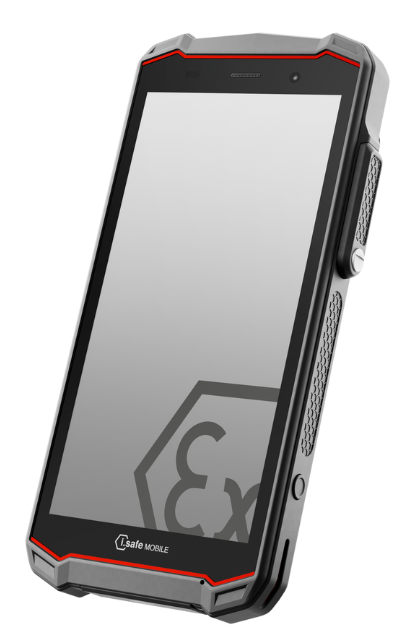

Choosing the Right ATEX Smartphone for Zone 1 Applications
ATEX smartphones are now firmly embedded in how work is carried out in Zone 1 hazardous areas. They are no longer supplementary communication devices, but multi-functional tools used for inspection reporting, photographic evidence, access to digital documentation, lone worker applications, and operational communication. As their role has expanded, the criteria for selecting an appropriate device has become more nuanced and increasingly technical.
For most engineers and site managers, certification is already a given. The more pressing question is how a smartphone performs once it is placed into continuous service in an industrial environment, where reliability, repeatability, and integration into existing workflows matter far more than headline specifications.
Operational Demands on Zone 1 Smartphones
In practical terms, a Zone 1 smartphone is expected to support a wide range of concurrent tasks. It may be used to photograph equipment during inspection rounds, access maintenance procedures, view instrumentation diagrams, communicate with control rooms, and interface with third-party industrial applications. These activities place sustained demands on processing performance, storage, and system stability.
Devices that struggle under multi-tasking conditions can introduce delays or force workarounds, particularly when used across long shifts or in remote areas of site. From an engineering perspective, consistent performance under load is often a more meaningful metric than peak capability.
Camera Performance for Inspection and Documentation
Camera capability is a critical factor in many hazardous area applications, particularly where photographic evidence forms part of inspection, maintenance, or compliance records. In these cases, the practical performance of the camera system is more important than nominal resolution figures.
Engineers typically require fast autofocus for close-up detail, reliable image clarity in low-light or confined environments, and consistent results across repeated use. Poor camera performance can compromise inspection records or require repeat visits, adding unnecessary time and cost to routine maintenance activities.
Power Management and Battery Degradation
Battery performance remains one of the most significant limiting factors in ATEX smartphones. Devices are often expected to operate continuously across a full shift, with limited opportunity for charging, particularly in hazardous areas where charging infrastructure may be restricted.
From a technical standpoint, it is important to consider not only initial battery capacity but also long-term degradation. A device that performs adequately when new may become operationally restrictive after extended service, leading to increased downtime or the need for additional devices in circulation.
Usability Under Industrial Constraints
Usability is often underestimated when evaluating ATEX smartphones, yet it has a direct impact on operational efficiency. Engineers may be working with gloves, operating equipment in low-light conditions, or transitioning between indoor and outdoor environments.
Screen sensitivity, physical button layout, and overall device ergonomics influence how quickly tasks can be completed and how prone a device is to user error. In practice, a technically capable device that is awkward to operate can reduce productivity rather than improve it.
Software Support and System Compatibility
ATEX smartphones are commonly deployed as part of wider digital ecosystems, integrating with maintenance management systems, inspection software, and lone worker platforms. As such, long-term software support and operating system stability are critical considerations.
Engineers responsible for device fleets must account for operating system updates, security patching, and ongoing compatibility with industrial applications. A clear software roadmap can help ensure devices remain usable throughout their intended service life without introducing compatibility risks.
Positioning Smartphones Within a Broader Technology Stack
While ATEX smartphones offer considerable flexibility, they are not always the optimal solution for every task. In some applications, larger tablets or dedicated camera systems may provide better usability or performance.
From a system-level perspective, understanding where smartphones sit within a broader mobile technology strategy helps ensure the right balance between portability, capability, and task-specific performance.
A Zone 1 Smartphone Designed Around Real Operational Requirement
In practice, many of the requirements placed on Zone 1 smartphones converge around a few critical factors: dependable inspection imaging, predictable all-shift performance, usability with PPE, and long-term platform stability. Devices that attempt to excel in one area while compromising in others often fall short once deployed at scale.
The i.safe MOBILE IS540.1 aligns closely with these operational demands. It is widely adopted in Zone 1 environments because it delivers consistent, repeatable performance across the tasks engineers actually carry out on site. The camera system is well suited to inspection and documentation work, providing reliable image quality in poor lighting and confined spaces without requiring repeated attempts or workarounds. This directly supports inspection integrity and reduces the risk of incomplete or unusable records.
From a power management perspective, the IS540.1 is designed to support sustained daily use rather than intermittent operation. This makes it well suited to full inspection rounds and shift-long deployment, reducing the need for charging interruptions or spare devices. Over time, this predictability becomes particularly important for sites managing multiple devices or standardising on a single platform.
Usability is another area where the IS540.1 fits well with hazardous area working conditions. The device remains practical to operate when wearing gloves and when transitioning between environments with variable lighting, allowing engineers to focus on the task rather than compensating for device limitations. Combined with long-term software support and compatibility with common industrial applications, this makes the IS540.1 a straight-forward choice for organisations looking to deploy ATEX smartphones as a core operational tool for day to day work.
For many engineering teams, these factors collectively make the IS540.1 not just a compliant option, but a device that closely matches how work is actually performed in Zone 1 hazardous areas.