
Safety Relays

When a load such as a valve or motor cannot be driven directly by a safety PLC or other safety controller, an interposing relay may be required. This can be because the controller cannot provide the power or voltage needed by the load, or because several contacts need to be operated from the same control signal.
Where the relay forms part of an IEC 61508/61511 Safety Instrumented Function (SIF), the relay selected needs to support the required safety function and level of risk reduction. GM International offers a wide range of SIL-certified safety relays with different contact arrangements, ratings and input requirements for applications including emergency shutdown (ESD), Fire & Gas (F&G), Burner Management Systems (BMS), valve control and motor control.
Selecting the appropriate safety relay therefore involves more than simply choosing a SIL rating. The operating condition of the load, required safety action, contact arrangement, load rating and any diagnostic requirements all need to be considered.
Safety Relay Operating Conditions
The required safety function is one of the first considerations when selecting a safety relay. Applications can broadly require equipment to be either energised or de-energised in order to reach the required safe state.
Two commonly used descriptions are:
-
ETS – Energise to Safety/Trip
-
DTS – De-energise to Safety/Trip
The normal operating condition also depends on the state of the relay coil and its contacts. This creates four common arrangements:
-
NE relay coil / NC contacts – load normally energised
-
NE relay coil / NO contacts – load normally de-energised
-
ND relay coil / NO contacts – load normally de-energised
-
ND relay coil / NC contacts – load normally energised
NE, or Normally Energised, means that power is present at the relay coil during normal operation. ND, or Normally De-energised, means that the relay coil is normally unpowered. The NO or NC contact arrangement then determines whether power is available to the connected load under normal operating conditions.
The correct combination depends on the required safety action. Rather than selecting a relay purely by contact rating or SIL level, it is important to establish how the load operates normally and what needs to happen when the safety function is demanded.
Other practical considerations include the load contact rating, the number of contacts that need to be driven from the same control signal, whether one or both sides of the load need to be switched and whether additional fault diagnostics are required.
GM International provides application diagrams, coil information and contact ratings within the individual product datasheets to support selection for a particular application.
D5000 Series Safety Relay Outputs
GM International's D5000 Series includes a wide range of SIL 3 relay output modules for normally energised (NE), normally de-energised (ND) and mixed load requirements.
Different contact ratings and configurations are available depending on the load and the required safety function. The products below cover some of the most common application requirements within the range.
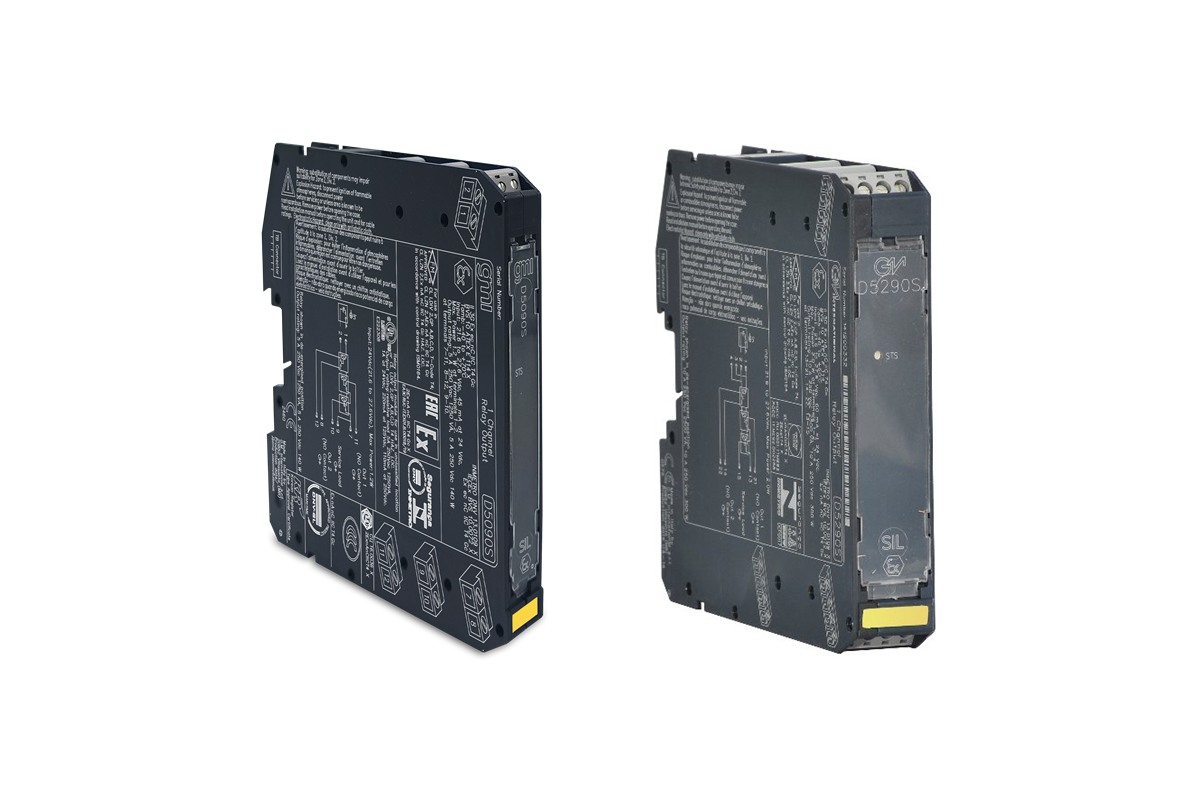
D5090S
SIL 3 relay output module for 5 A normally energised loads.
D5091S
SIL 3 relay output module for 5 A normally de-energised loads.
D5094S
SIL 3 relay output module for 5 A NE/ND loads. Designed for applications where maintaining process availability and reducing unnecessary trips is particularly important.
D5290S
SIL 3 relay output module for 10 A normally energised loads.
D5291S
SIL 3 relay output module for 10 A normally de-energised loads.
D5290S-078
SIL 3 relay output module for applications requiring flexible control of multiple NE and ND loads.
Additional D5000 variants are available for alternative input voltages, low-power applications, safe-area installation and different contact arrangements. If your application requires a configuration not shown here, Exloc can help identify the appropriate option from the wider GM International range.
Safety Relays with Line Monitoring
Some applications need more than a simple switching function. Additional monitoring can help identify faults in the field wiring or connected load and provide more useful information back to the control system.
GM International offers SIL 3 safety relays with line monitoring for applications where this additional diagnostic capability is required.
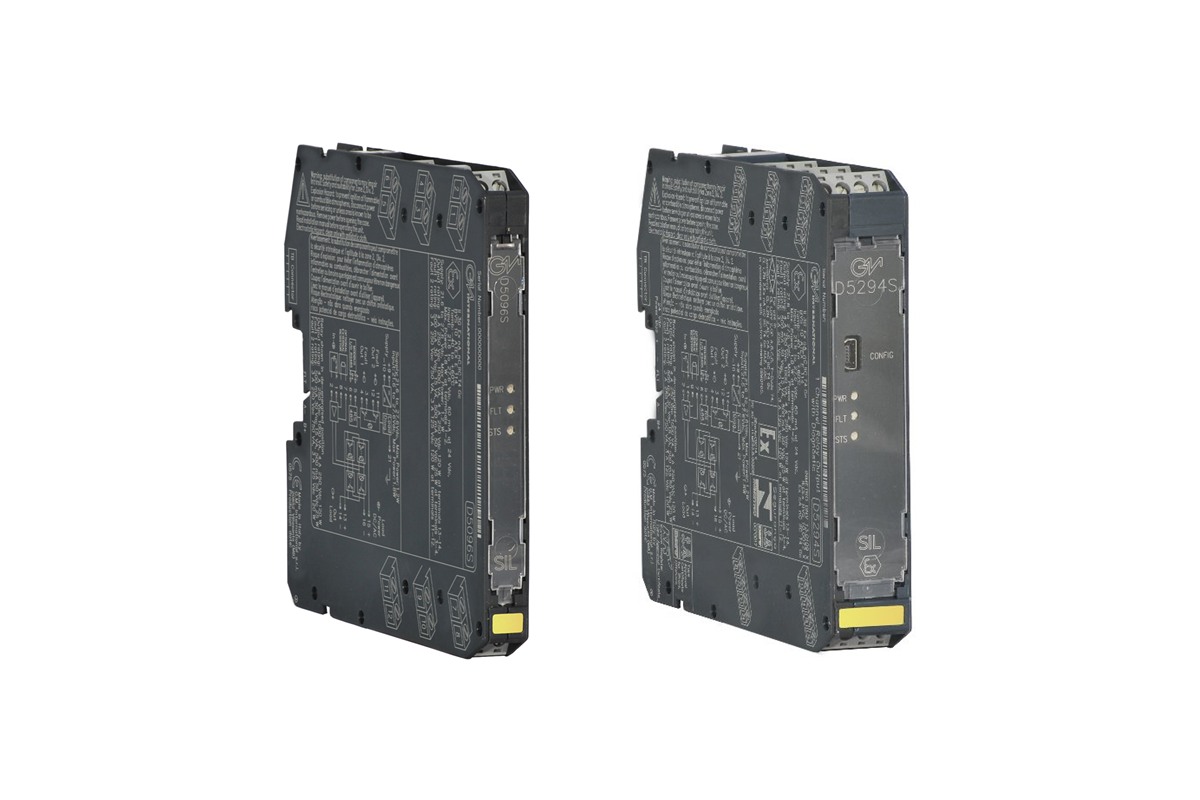
D5096S
SIL 3 relay output module for 5 A NE/ND loads with line-fault detection. The module can monitor conditions including open and short circuits and load-voltage faults, helping provide greater visibility of problems within the field circuit.
D5294S
SIL 3 relay output module for 5 A NE/ND loads with line-fault detection. This provides another option for applications where safety switching and additional circuit diagnostics are required.
Further diagnostic variants are available within the D5000 range. Exloc can help identify the most appropriate option where additional monitoring or a different configuration is required.
SIL 3 Signal Detection
Not every safety-related application requires a conventional relay output. The D5093 Series is designed for applications where the requirement is to detect the presence of an AC or DC electrical signal and reproduce its state at the output.
The modules can detect input signals from 24 to 220 Vac/Vdc and provide an optically coupled solid-state output, allowing the control system to monitor the state of the incoming signal.
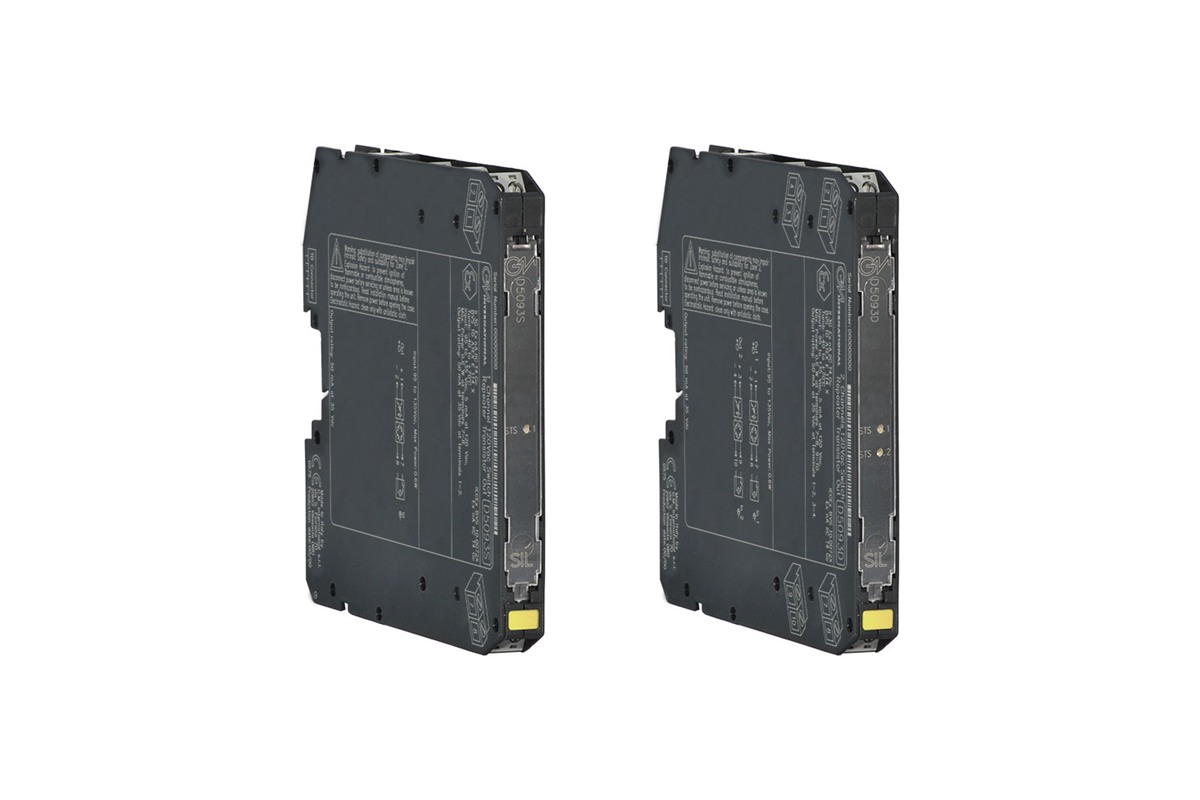
D5093S / D5093D
SIL 3 24–220 Vac/Vdc signal detectors, available in single- and dual-channel versions.
Termination-board versions are also available where required.
X1 Series Safety Relays
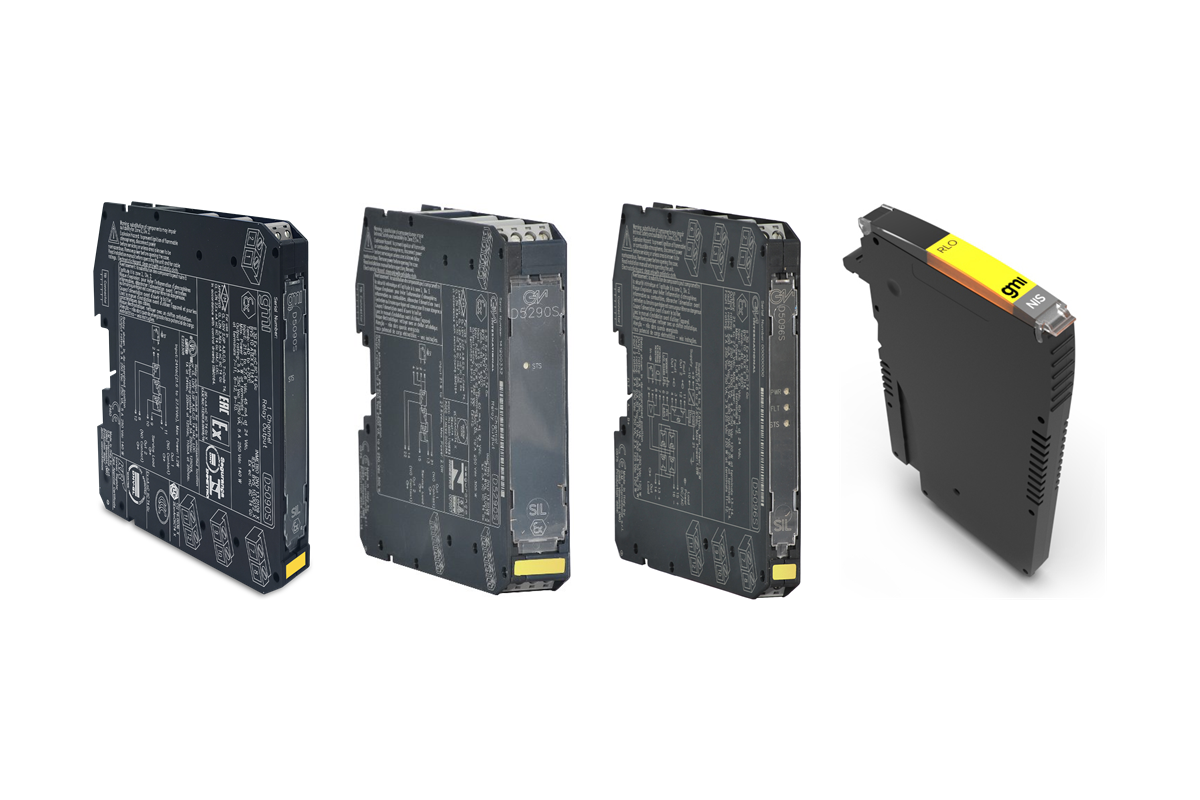
GM International's X1 Series provides a more compact approach for applications where cabinet space and high-density installation are important.
X1 modules are only 10 mm wide and are designed for use with dedicated termination boards. The range includes safety relay outputs for normally energised and normally de-energised / Fire & Gas applications, with both electromagnetic and solid-state options available.
Depending on the model, SIL 2 and SIL 3 versions are available, together with variants providing additional diagnostics. The X1 range also includes a SIL 3 voltage detector for AC/DC signal monitoring.
For applications where a compact, termination-board-based architecture is preferred, Exloc can help identify the appropriate X1 safety relay configuration.
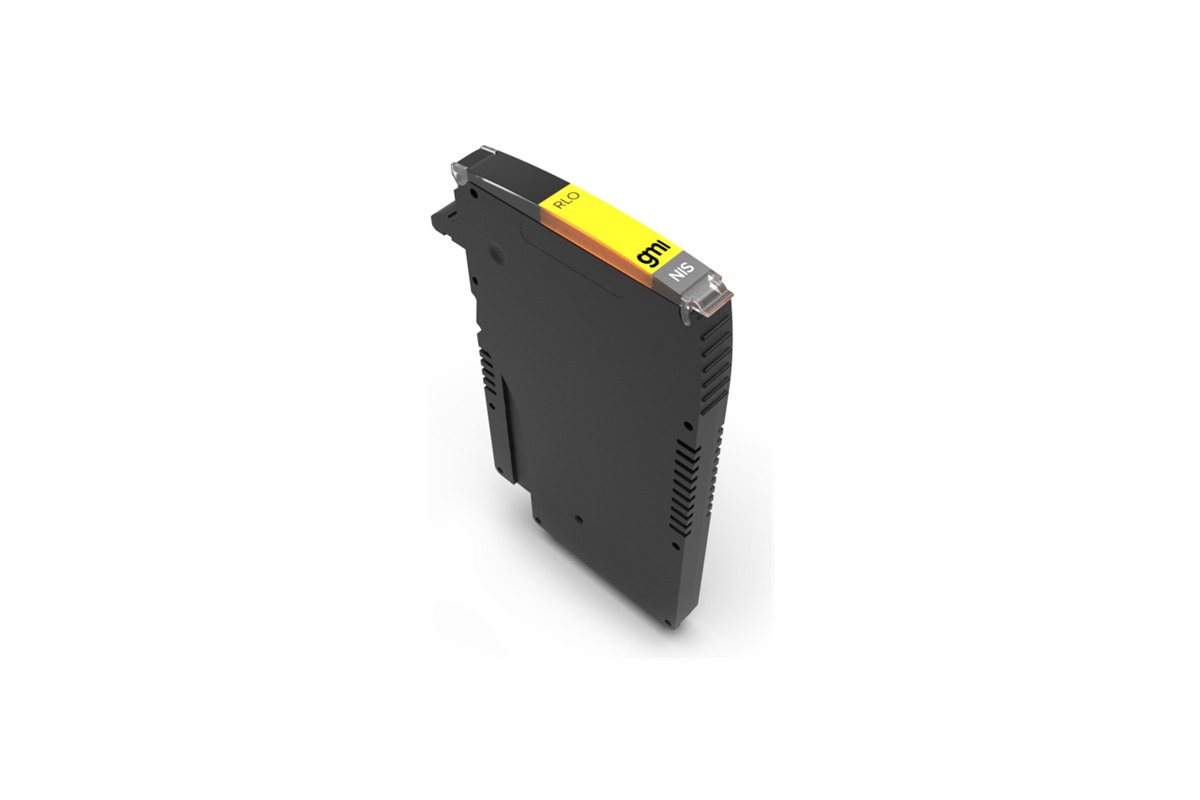
D1000 Series Safety Relays
The D1000 Series has been widely used for SIL-certified relay interfacing and remains relevant for existing installations, replacement requirements and spare parts.
GM International is currently phasing out the D1000 Series, with affected products moving to Spare-Only status from 1 January 2027. For new applications, current D5000 or X1 Series solutions should normally be considered instead.
If you have an existing D1000 installation, Exloc can help with replacement requirements and identify the most appropriate current GM International alternative where a migration is required.