
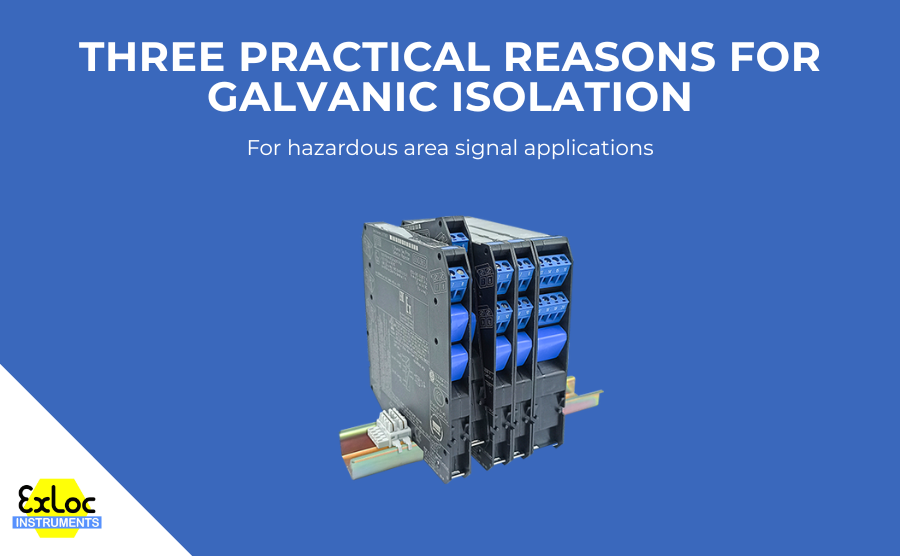
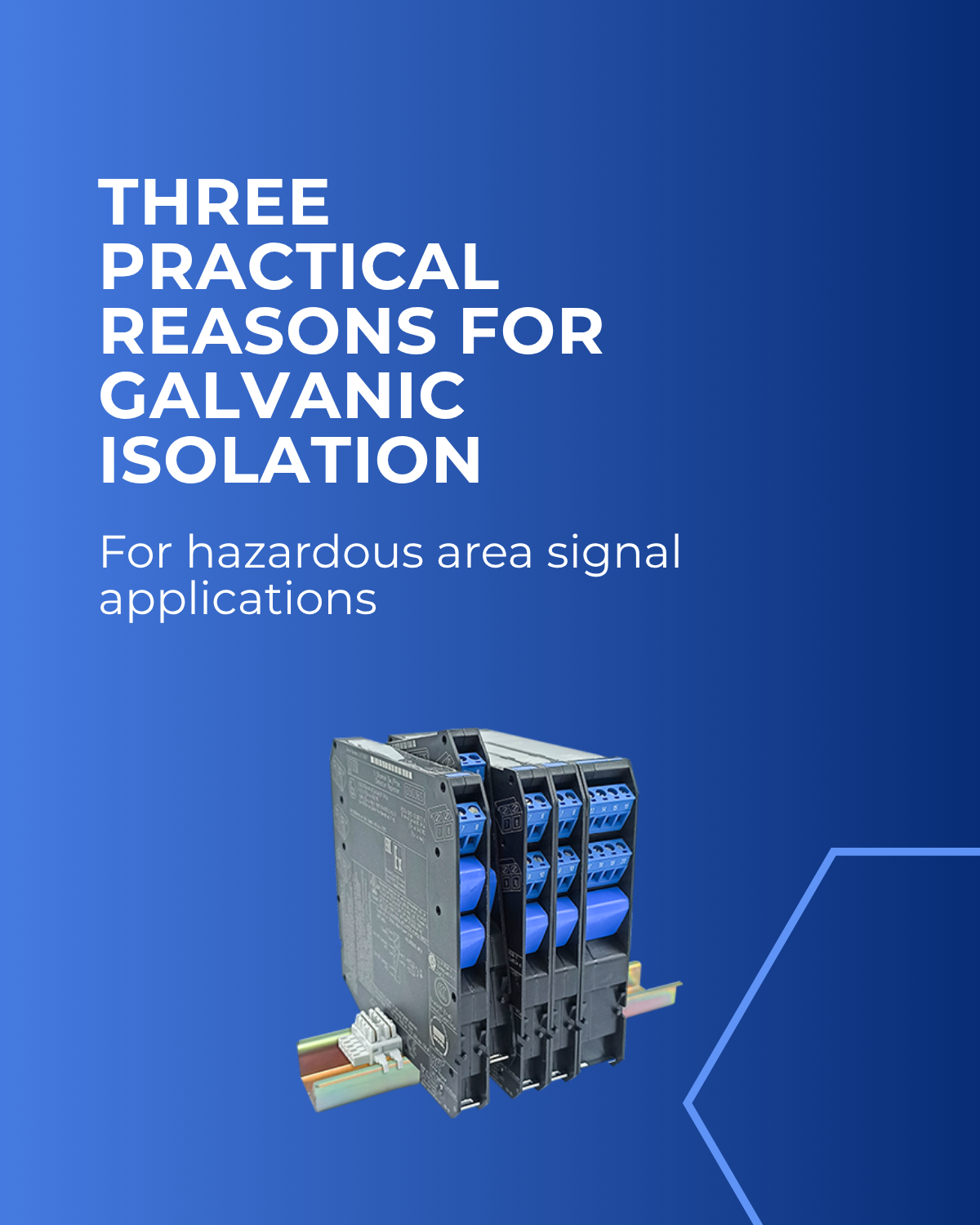
Galvanic isolation is an important consideration in many hazardous area signal applications.
Signals may need to pass between field devices installed in hazardous areas and control equipment located in safe areas. Galvanic isolation provides electrical separation between these circuits while allowing the required signal to be transferred.
This article explains what galvanic isolation does, three practical reasons why it matters, and where the GM International D5000 Series fits.
What does galvanic isolation do?
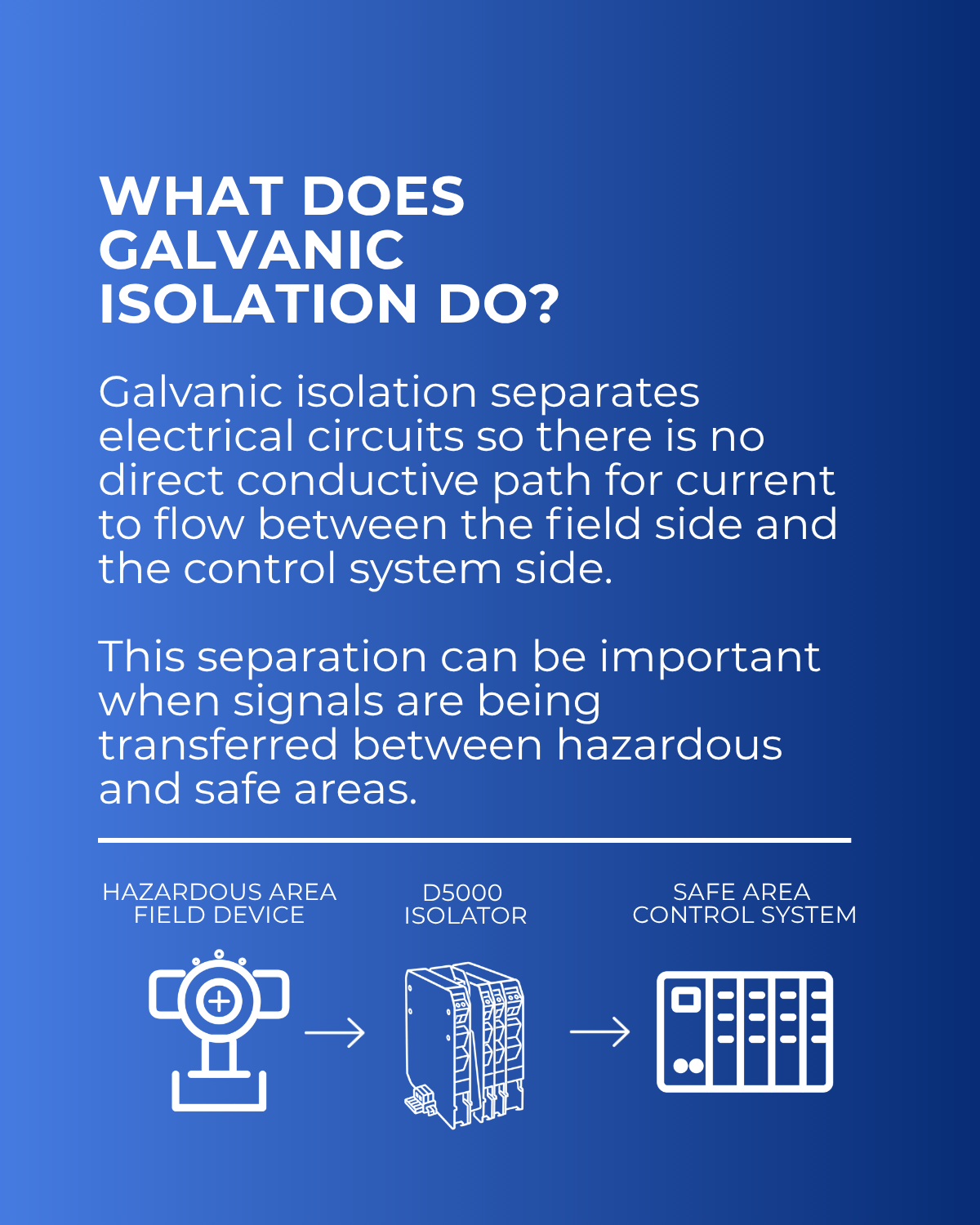
Galvanic isolation separates electrical circuits so there is no direct conductive path for current to flow between the field side and the control system side.
This separation can be important when signals are being transferred between hazardous and safe areas.
In practice, galvanic isolation can support several important requirements within instrumentation and control applications.
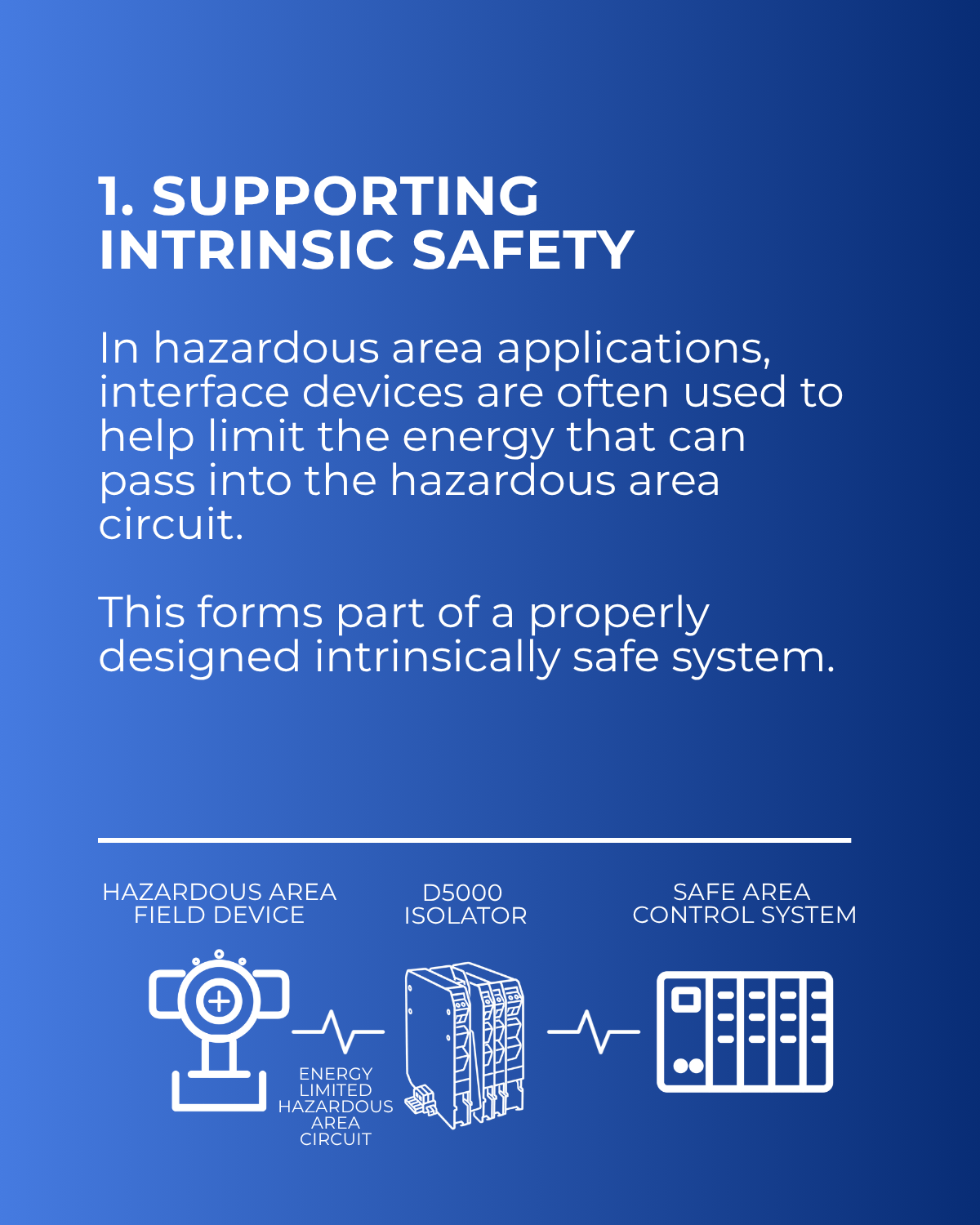
1. Supporting intrinsic safety
In hazardous area applications, interface devices are often used to help limit the energy that can pass into the hazardous area circuit.
This forms part of a properly designed intrinsically safe system.
Intrinsic safety is commonly used for instrumentation and control circuits where voltage and current need to be maintained at safe levels between connected devices.
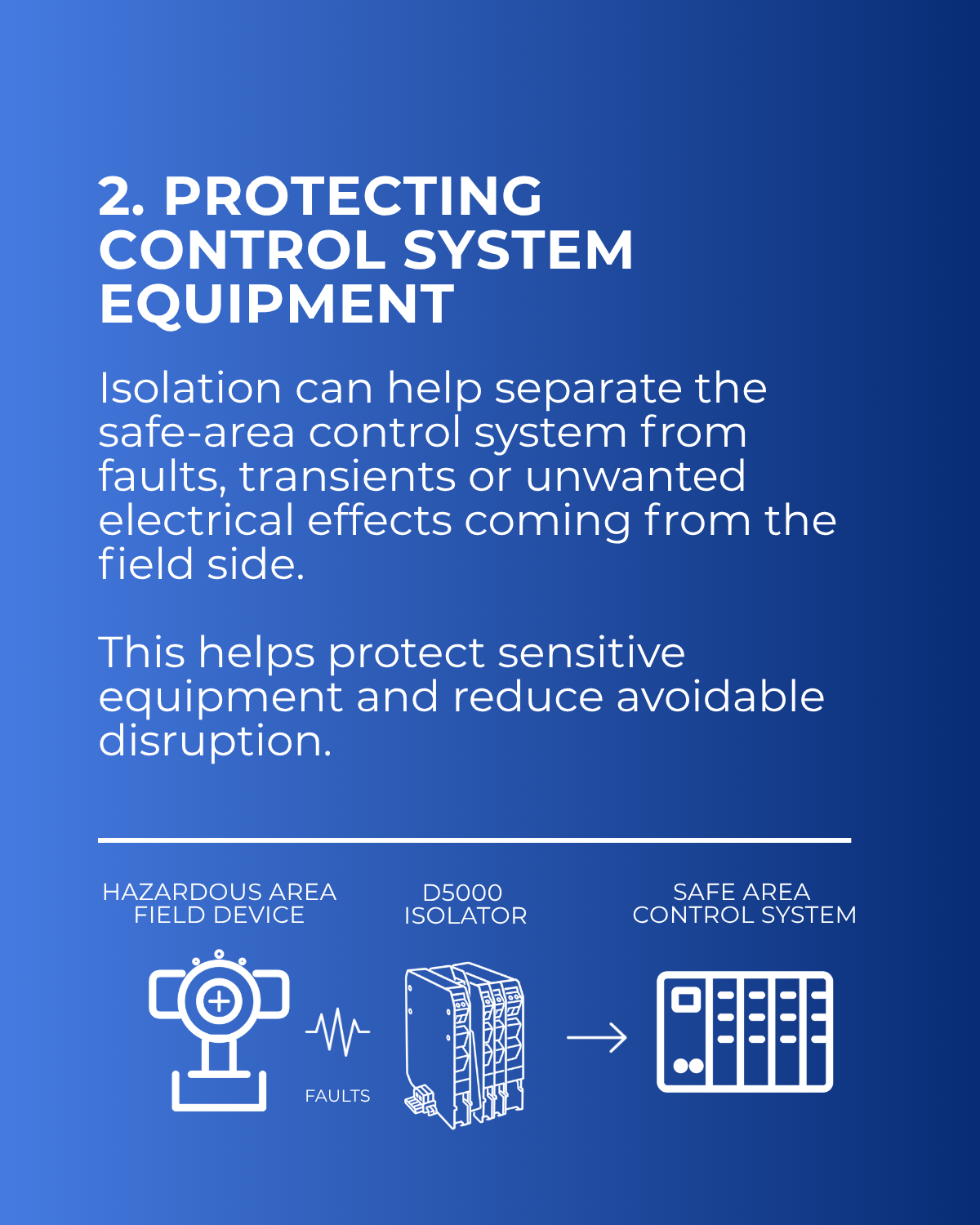
2. Protecting Control System Equipment
Field devices and their associated wiring can be exposed to faults, transients and other unwanted electrical effects.
Galvanic isolation can help separate the safe-area control system from these effects coming from the field side.
This helps protect sensitive control equipment and can reduce avoidable disruption to the wider system
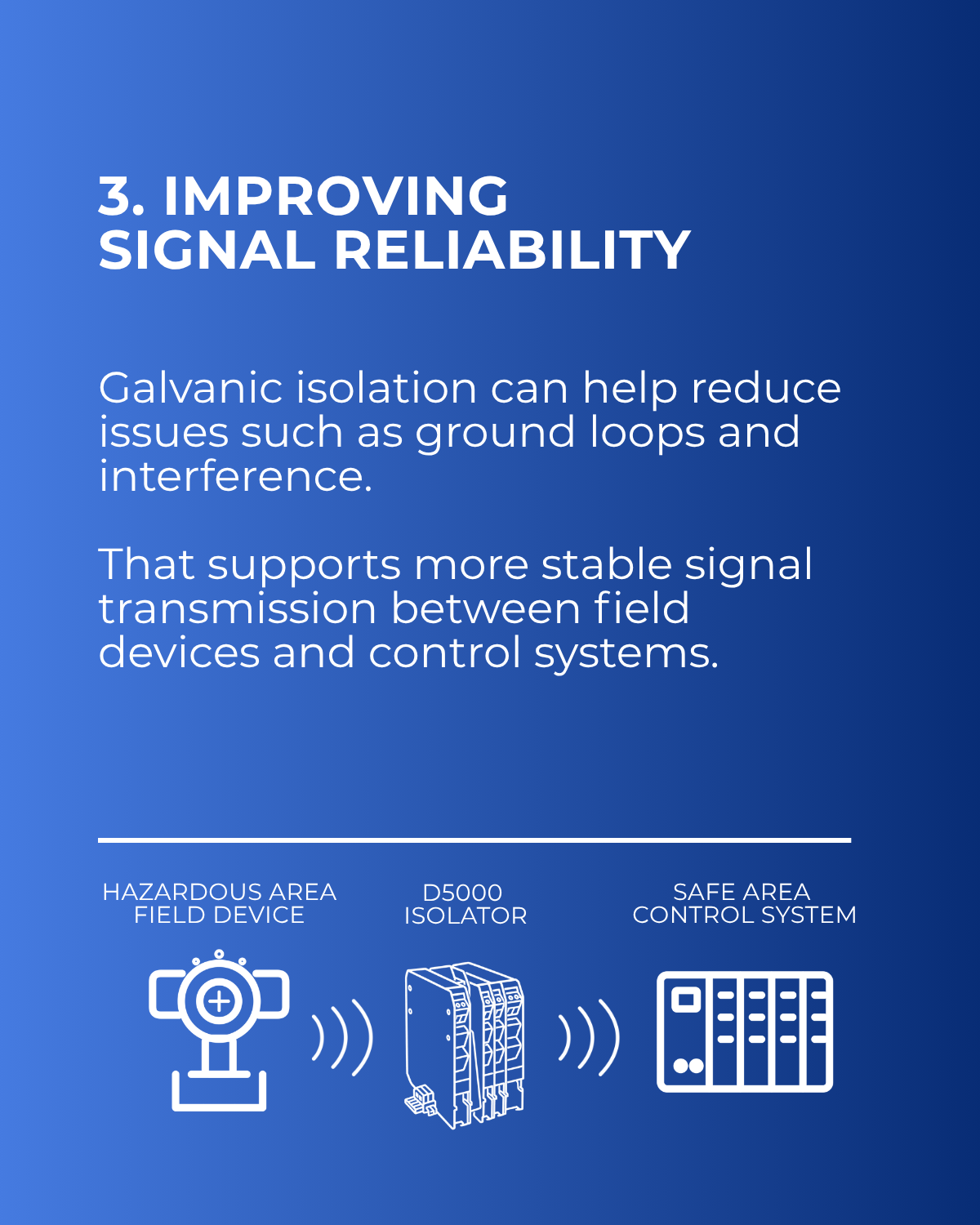
3. Improving signal reliability
Electrical interference and differences in earth potential can affect the quality of signals travelling between field devices and control equipment.
Galvanic isolation can help reduce issues such as ground loops and interference.
This supports more stable signal transmission between field devices and control systems.
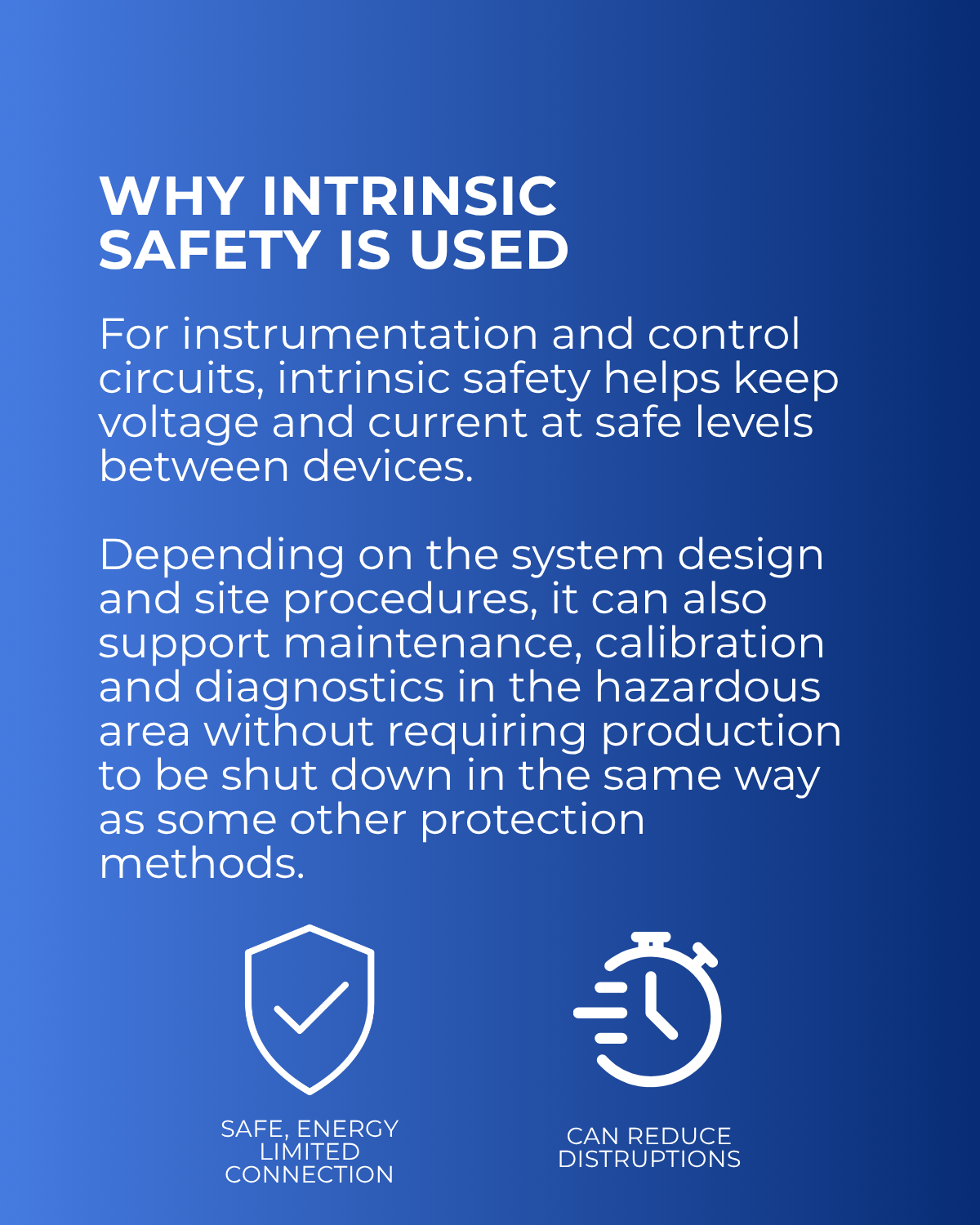
Why Intrinsic Safety is Used for Instrumentation and Control Circuits
For instrumentation and control circuits, intrinsic safety helps keep voltage and current at safe levels between devices.
Depending on the system design and site procedures, it can also support maintenance, calibration and diagnostics in the hazardous area without requiring production to be shut down in the same way as some other protection methods.
This can be particularly valuable in industrial applications where continued access to instrumentation is important for operation, inspection and maintenance.
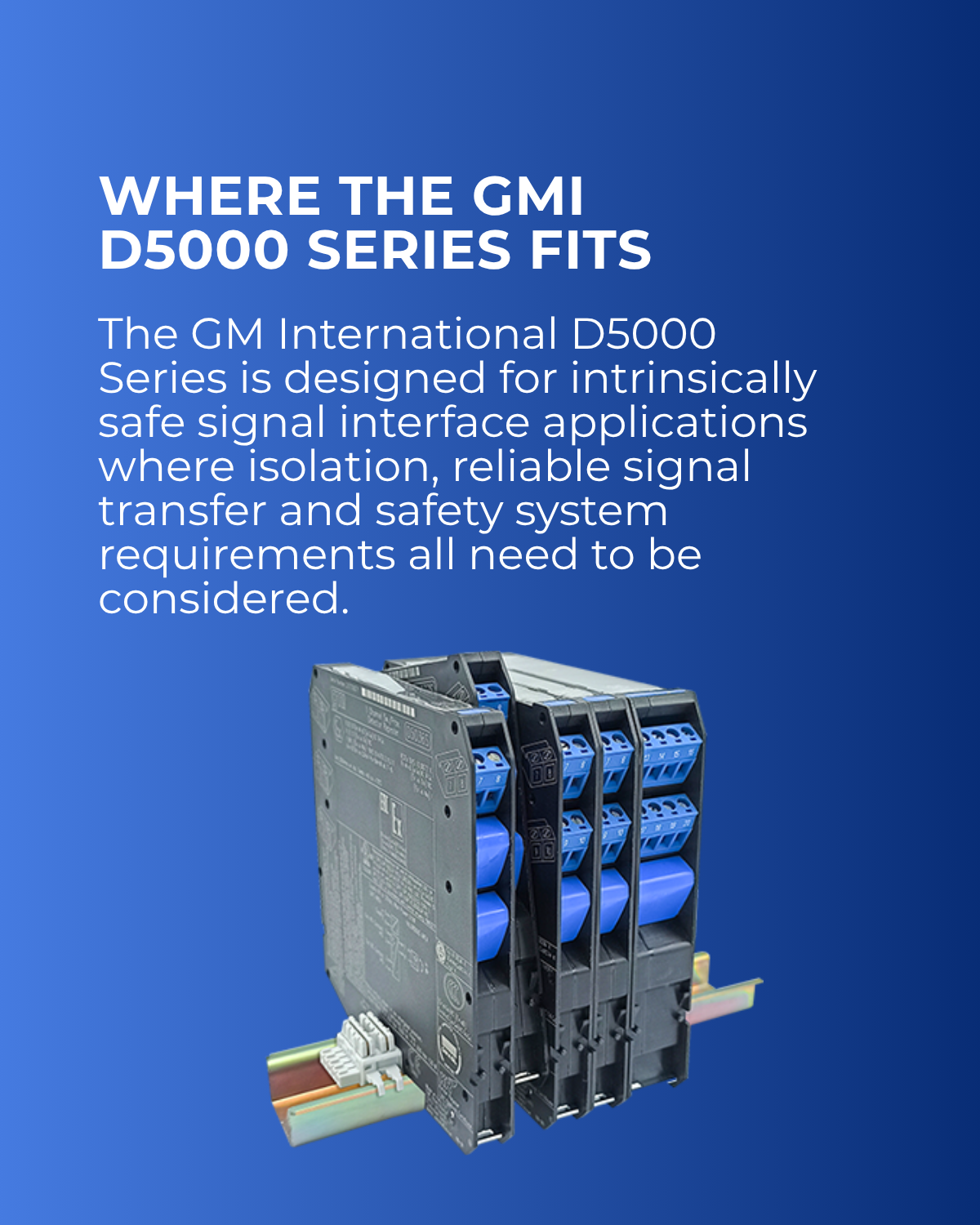

Where the GM International D5000 Series Fits
The GM International D5000 Series is designed for intrinsically safe signal interface applications where isolation, reliable signal transfer and safety system requirements all need to be considered.
The range provides an interface between field devices and safe-area control systems, helping support the transfer of instrumentation and control signals across the hazardous-area boundary.
Exloc supplies GM International intrinsically safe isolators and interface solutions for hazardous area applications. The correct interface solution will depend on the field device, signal type, control system and wider application requirements.
Contact Exloc for support with selecting the appropriate GM International isolator or interface module for your application.